
Medication Side Effects vs. Drug Interactions: Understanding the Key Differences
Learn the essential differences between medication side effects and drug interactions. Understand how these concepts impact your health and ways your local pharmacy can help.
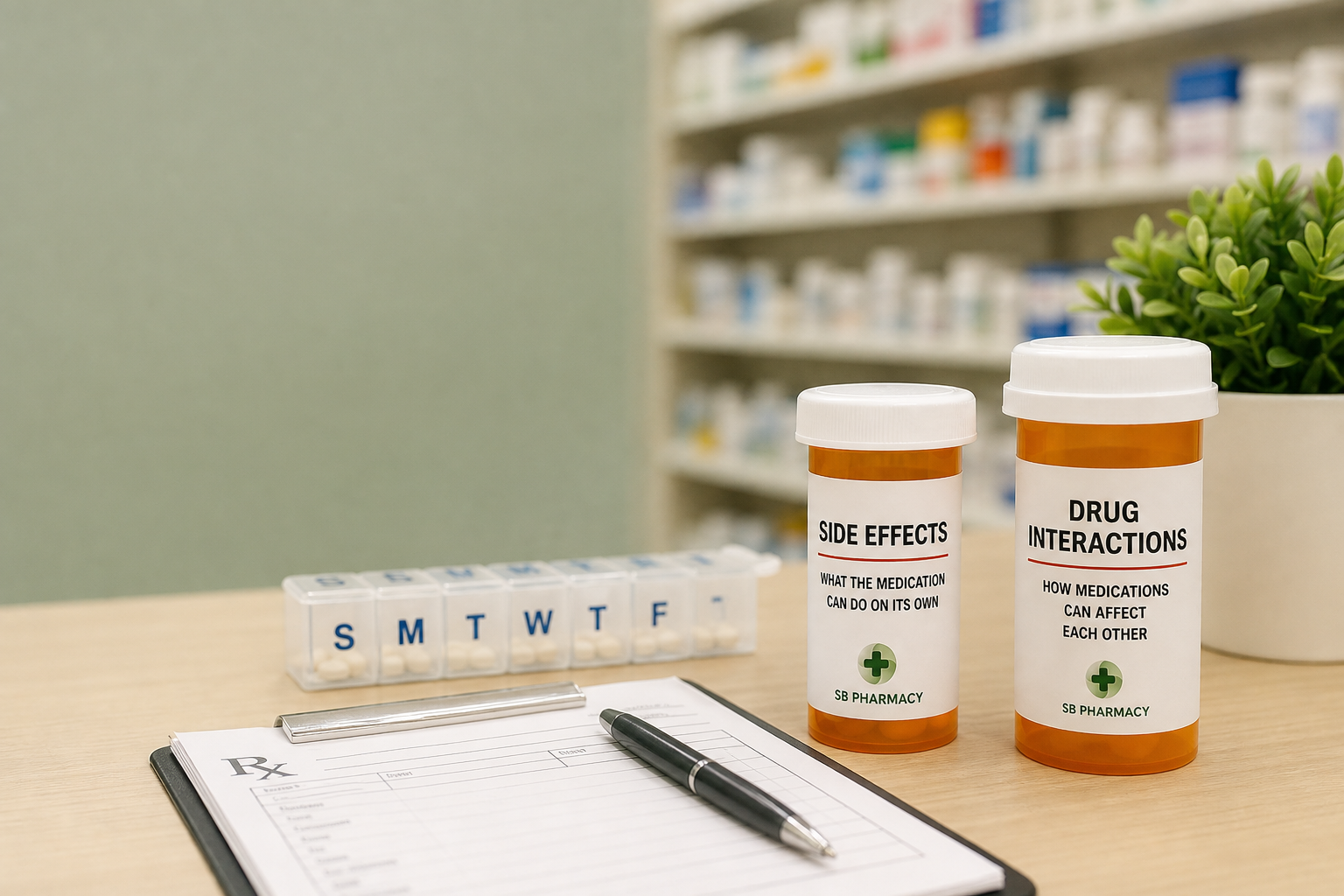
Medication Side Effects vs. Drug Interactions: Understanding the Key Differences
When you pick up a new prescription or add an over-the-counter medication to your routine, you’ll often hear about possible side effects and drug interactions. While these terms are sometimes used together, they mean very different things. Knowing the difference can help you manage your medications more safely and empower you to have better conversations with your pharmacist or healthcare provider. This guide from SB Pharmacy explores the key differences between side effects and drug interactions, why they matter, and how your local East Harlem pharmacy team can support you.
What Are Medication Side Effects?
Side effects are unintended or unwanted effects that can occur when taking a medication as prescribed or as directed. Every medication—whether prescription or non-prescription—may cause side effects. The type and likelihood of side effects can depend on many factors, such as the specific medication, dose, duration, and your individual response.
Typical Characteristics of Side Effects
- Usually consistent and studied in clinical trials before a medication is approved
- Can range from mild to serious
- May start when beginning a medication or after taking it for some time
- Reported in the medication’s official information and on the pharmacy label or handout
Common Examples
- Drowsiness from certain allergy medications
- Upset stomach from antibiotics
- Dry mouth from some blood pressure medications
- Headache when starting a new medication
Why Side Effects Occur
Medications are designed to cause effects in the body to treat symptoms or conditions. Sometimes, however, these effects can also influence other systems or processes, leading to side effects that are unrelated to the medication’s main purpose.
What to Do If You Notice a Side Effect
If you experience an unwanted reaction to a medication, contact your pharmacist or prescriber. Some side effects may be expected and manageable, while others may require a change in your medication or treatment plan. Never stop or change a medication without professional guidance.
What Are Drug Interactions?
Drug interactions happen when the effect of one medication is altered by another substance. This substance could be another prescription drug, an over-the-counter product, a supplement, a certain food, or even an herbal remedy. Interactions can also include the effect between medications and alcohol or caffeine.
Types of Drug Interactions
- Drug-drug interactions: Between two or more medications
- Drug-food interactions: Between a medication and certain foods or drinks
- Drug-supplement interactions: Between a medication and vitamins or herbal products
- Drug-condition interactions: When a medication affects a separate existing health condition
What Happens During a Drug Interaction?
Drug interactions may:
- Increase or decrease the effectiveness of one or more medications
- Cause unexpected or harmful side effects
- Change how your body absorbs, breaks down, or eliminates a drug
Some interactions are mild, while others can be serious, making it important to review all of your medications and supplements with your pharmacist.
Examples of Drug Interactions
- Blood thinners combined with certain pain relievers may increase the risk of bleeding
- Some antibiotics may reduce the effectiveness of birth control
- Mixing antidepressants with migraine medication can increase the risk of serious side effects
- Grapefruit can affect how your body processes some heart or cholesterol medications
Key Differences: Side Effects vs. Drug Interactions
It’s easy to see why these concepts are sometimes confused. However, understanding their differences is important for medication safety and communication:
| Side Effects | Drug Interactions | |
|---|---|---|
| What is it? | Unwanted effects from a single medication | Effects caused by combining substances |
| Cause | Direct action of the medication on your body | The way substances affect each other’s actions |
| Predictable? | Often listed in medication guides and studied | May be known or unpredictable |
| Can you avoid? | Sometimes, by switching drugs or adjusting dose | Sometimes, by avoiding combinations |
In summary:
- Side effect: A possible reaction to a medication taken alone as directed.
- Drug interaction: A change in a medication’s effect caused by another substance.
How Pharmacists Help Prevent Drug Interactions and Manage Side Effects
Pharmacists play an essential role in keeping medication use safe. At SB Pharmacy, our team is dedicated to reviewing your medications for possible interactions and making sure that you receive clear information about side effects.
How SB Pharmacy Supports You
- Reviewing your complete medication list (including prescriptions, supplements, and over-the-counter products)
- Alerting you and your prescriber to any potential interactions or duplicate therapies
- Providing easy-to-understand medication guides
- Answering questions about side effects and how to manage them
- Working with you and your healthcare provider to address concerns or symptoms
If you’re unsure about a new or ongoing medication, bringing a complete list of everything you take to the pharmacy can help your pharmacist check for problems. The SB Pharmacy team in East Harlem welcomes questions from the community and is here to provide friendly, professional guidance.
Visit sbpharmacynyc.com to learn more or ask about your medications.
Practical Tips for Understanding and Managing Side Effects
1. Read Your Medication Guide
Every prescription should come with a patient information leaflet. This lists possible side effects, what to watch for, and when you should contact your provider.
2. Check Labels Before Mixing Medications
Before starting something new—even vitamins or herbal remedies—ask your pharmacist about possible interactions.
3. Keep an Up-to-Date Medication List
Include everything you take regularly:
- Prescription medications
- Over-the-counter products
- Vitamins and minerals
- Herbal supplements
- Any recent changes
4. Ask Questions
If you’re ever unsure, don’t hesitate to reach out to your pharmacist. Some helpful questions include:
- Are there any serious side effects I should watch for?
- What foods or drinks should I avoid with this medication?
- Can I take this medication with my other prescriptions?
- When should I call if I experience a reaction?
5. Note Any New Symptoms
Keep a log of unusual symptoms after starting a medication or changing your regimen. This can help your pharmacist or prescriber identify if you’re experiencing a side effect or an interaction.
Distinguishing Warnings, Precautions, and Allergic Reactions
Medication information can also refer to warnings and precautions, which are not the same as common side effects or interactions:
- Warnings and precautions: These are serious risks carefully monitored in clinical studies or post-market experience. Your healthcare provider may recommend monitoring or testing related to these risks.
- Allergic reactions: Unlike side effects, these involve the immune system and can be life-threatening. Symptoms may include rash, swelling, difficulty breathing, or severe dizziness. Seek emergency help if you experience allergic symptoms.
The Role of Communication and Consistency
Managing medications well usually depends on good communication and consistent routines. The more your pharmacy team knows about your full medication list and health goals, the better we can support you:
- Keep all of your prescriptions at one pharmacy when possible
- Inform your pharmacist of any changes from your prescriber
- Keep your medication list updated
This allows your pharmacist to spot potential concerns that might be missed if a medication is filled elsewhere or not mentioned.
When to Contact Your Pharmacist or Healthcare Provider
Always seek advice if you:
- Experience side effects that are severe, unexpected, or getting worse
- Notice changes after starting, stopping, or changing medications
- Have questions about mixing medications, supplements, or foods
- Are unsure if you should continue a medication
Getting professional advice helps prevent complications and keeps you safe.
Responsible Use of Over-the-Counter and Herbal Products
Many people use vitamins, herbal supplements, and over-the-counter remedies for everyday wellness. It’s important to remember that these can cause drug interactions, especially with prescription medications. Even products labeled as ‘natural’ can interact with medications or lead to side effects.
Ask your pharmacist to review all supplements or new products before you start them, especially if you take regular medications or manage an ongoing health condition.
Medication Organization Tools and Services
Pharmacies like SB Pharmacy offer various tools and services to support safe medication use:
- Weekly medication organizers or pillboxes
- Printouts of your medication list
- Refill reminders
- Medication synchronization services (where available)
- Private consultations with the pharmacy team
If you’d like to better organize your medications or set up a schedule, speak with the SB Pharmacy team about options for maintaining consistency and communication.
Conclusion: Partnering With Your Local Pharmacy for Medication Safety
Understanding the difference between medication side effects and drug interactions is a crucial step in managing your health. By staying informed, keeping an updated medication list, and maintaining open communication with your pharmacy, you can lower your risk of problems and get the most from your treatment. SB Pharmacy is committed to providing friendly, professional, and personalized support for our East Harlem neighbors, whether you need help with a new prescription or want to review your medication routine.
Prescription, medication, and everyday wellness needs involve many individual factors. This article is intended for general educational purposes and is not a substitute for individualized medical advice. Speak with a pharmacist, physician, or other qualified healthcare professional about your specific medications and health needs.
To learn more or speak with our pharmacy team, visit sbpharmacynyc.com or call 📞 (212) 534-2849. SB Pharmacy is proud to serve the Harlem community at 27-29 E 124th St, New York, NY 10035.