How Food Can Affect the Absorption of Certain Medications
Discover how the foods you eat can change the way your body absorbs some medications, why this matters, and how your local East Harlem pharmacy team can help guide you.
How Food Can Affect the Absorption of Certain Medications
When picking up or taking a new medication, many people wonder: should this be taken with food, on an empty stomach, or does it not matter? While each prescription can be different, the relationship between food and medication absorption is a key factor in ensuring your medicine works as intended. At SB Pharmacy, we often answer questions about this important topic to help our Harlem neighbors get the most out of their care.
Understanding how food and medicine interact is not just about comfort—it can make a real difference in health outcomes, safety, and everyday convenience. Whether you’re taking medication for a short-term condition or managing an ongoing health concern, knowing when and how to take your medicines is a vital part of effective self-care.
Why Does Food Affect Medication Absorption?
Medication absorption refers to how a drug enters your bloodstream after you take it. Your digestive system, and what’s in it at the time, can have a big impact on how much and how quickly the medication is absorbed. This explains why you might notice specific instructions on your medication bottle about taking it with food, water, or at certain times of day.
Key Ways Food Can Affect Absorption
- Speed of Absorption: Food can slow down or speed up how quickly a medication is absorbed.
- Amount Absorbed: Some medications are absorbed better with food, while others are absorbed better on an empty stomach.
- Interactions: Certain foods can interact with medications, changing their effect or causing side effects.
- Side Effects: Taking medicine with food can help reduce stomach upset caused by some medications.
Types of Medication and Their Food Requirements
Not all medications react the same way when taken with food. Here’s a look at common medication categories and how food may play a key role in your dosing routine.
Medications Best Taken With Food
Some medications are absorbed better when taken with food, or food helps reduce their side effects. Common examples include:
- Nonsteroidal Anti-Inflammatory Drugs (NSAIDs): Medicines like ibuprofen are often recommended with food to protect your stomach lining and reduce irritation.
- Certain Antibiotics: Medications such as amoxicillin-clavulanate may cause less stomach upset when taken with a meal.
- Oral Corticosteroids: Food can help reduce common stomach-related side effects.
- Oral Diabetes Medications: Some need to be taken with food to help prevent low blood sugar.
Medications Best Taken On an Empty Stomach
Some drugs are best absorbed when the stomach is empty (usually one hour before eating or two hours after a meal). These may include:
- Certain Thyroid Medications: Common thyroid replacements often have strict fasting requirements to ensure proper absorption.
- Some Osteoporosis Treatments: Medications like alendronate are usually taken on an empty stomach.
- Certain Antibiotics: Some antibiotics (such as tetracycline) can bind to minerals in food and are absorbed less efficiently with a meal.
Medications With Specific Food Interactions
In addition to timing, some foods can change how a medication works:
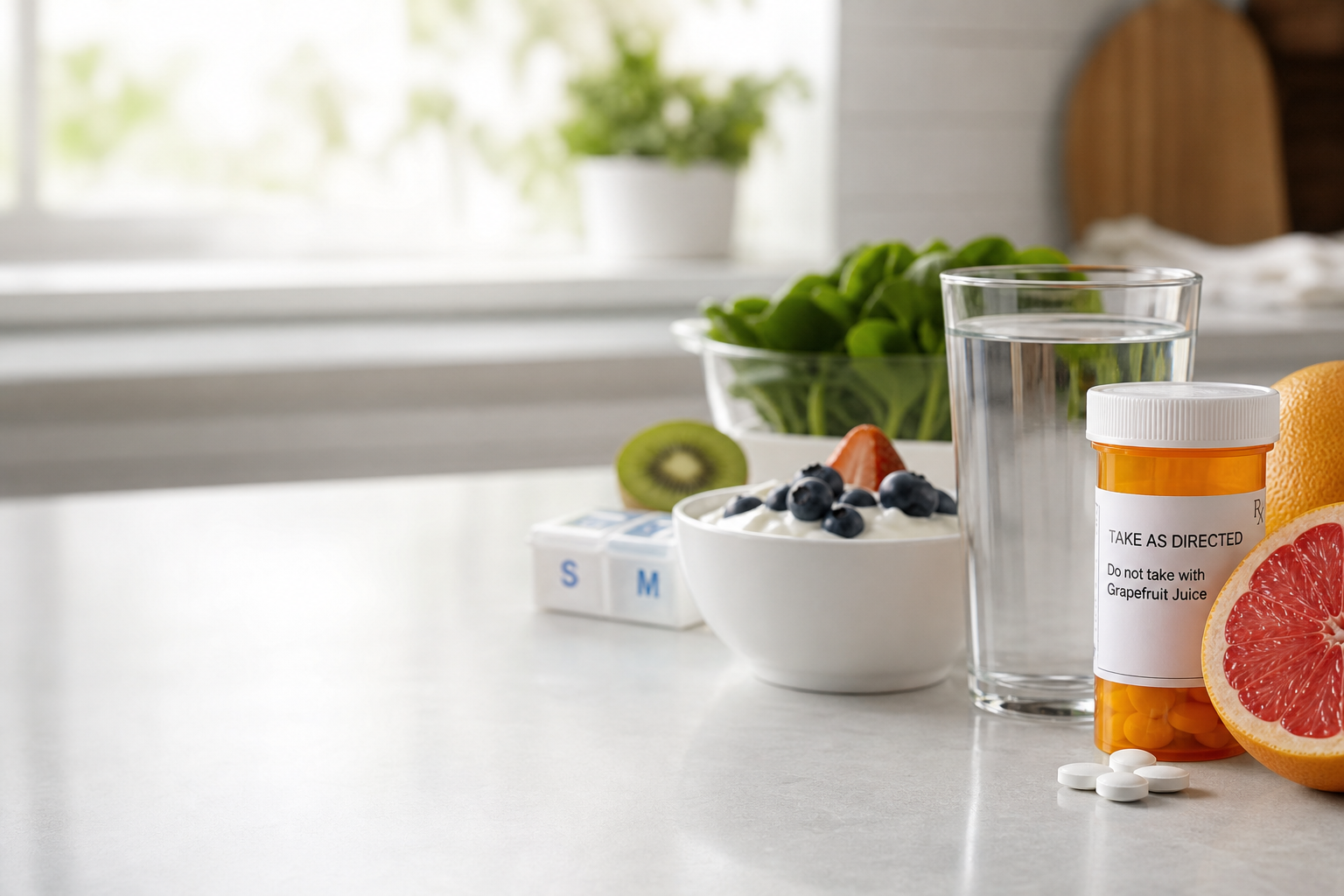
- Grapefruit and Grapefruit Juice: These can interfere with how certain cholesterol-lowering, blood pressure, and allergy medicines are broken down, possibly leading to higher (or unpredictable) levels in your system.
- Dairy Products: Calcium in milk and yogurt can disrupt the absorption of some antibiotics and other medications.
- High-Fiber Foods: Fiber can slow down how some medications move through your digestive tract.
- Vitamin K-Rich Foods: If you take certain blood thinners, foods high in vitamin K (such as spinach or kale) can influence how well the medication works.
Real-World Examples of Food–Medication Interactions
Understanding these interactions can help you avoid unexpected changes in how your medicine works. Here are a few practical scenarios:
Grapefruit and Medications
Grapefruit can affect how certain blood pressure medications, cholesterol medications, and allergy medicines are processed. Even small amounts of grapefruit can be enough to cause issues. Always ask your pharmacist if any of your medicines are impacted by grapefruit or grapefruit juice.
Iron Supplements and Dairy Products
Calcium in dairy can block your body from absorbing iron supplements effectively. For this reason, it’s often recommended to separate iron supplements and dairy products by a couple of hours.
Blood Thinners and Leafy Greens
If you are prescribed specific blood thinners, major swings in your intake of leafy greens—such as spinach, kale, or broccoli—may reduce the medicine's effectiveness. Maintaining a consistent intake of these foods may be recommended.
Antibiotics and Food
Some antibiotics should not be taken with milk or calcium-rich foods because calcium may bind to the medication, reducing absorption. Ask your pharmacist about the best way to take a new antibiotic.
Why Instructions Matter: The Role of Your Local Pharmacist
Every person’s body, prescription, and dietary habits are different. That’s why clear instructions from your healthcare provider and pharmacy are so important.
At SB Pharmacy, our team takes the time to explain medication directions and answer questions about food interactions. We can help you learn:
- Whether your prescription should be taken with food or on an empty stomach
- Which foods or beverages to avoid
- How to time your medications for meals or snacks
- What to do if you miss a dose at mealtime
- When it’s important to keep your eating habits steady
If you’re ever unsure, it’s best to confirm with a pharmacist before making changes to how or when you take your medications.
Preparing For Medication Changes or New Prescriptions
Starting a new prescription or changing your medication routine often means adjusting your habits. Here are a few practical tips to keep in mind:
- Read the Label: Always review pharmacy labels and patient information leaflets for specific dietary instructions.
- Ask Questions: If you're ever uncertain, contacting your local SB Pharmacy team can provide clarity.
- Be Consistent: For medications affected by certain foods, consistency is often key—especially with blood thinners and vitamin K intake.
- Keep a Schedule: Use a medication organizer or calendar to help with timing, especially if you have several prescriptions with different requirements.
- Report Issues: Let your healthcare provider or pharmacist know if you feel unexpected side effects, or if your medication doesn’t seem to be working as expected.
Common Misconceptions About Food and Medicines
Myth 1: Food Always Helps Prevent Stomach Upset
While food often helps, some medicines actually work better if taken on an empty stomach. Always follow the instructions provided by your healthcare professional or pharmacy label.
Myth 2: Drinking Milk with Medication is Always Safe
Milk and dairy products can interfere with how some medicines are absorbed, including some antibiotics and iron supplements.
Myth 3: Herbal Supplements Don’t Count As “Food”
Many herbal or natural supplements can interact with prescription medicine. Always let your pharmacist know about everything you take, including supplements and vitamins.
Important Questions to Ask Your Pharmacist
If you’re starting a new medication or have questions about your current routine, consider asking:
- Should I take this medicine with food or on an empty stomach?
- Are there any foods I should avoid while on this medication?
- What should I do if I miss a dose at mealtime?
- Do herbal supplements or vitamins affect this prescription?
- Will changes in my diet affect my medication?
- Is it okay to drink coffee, tea, or juice with my medicine?
Your pharmacy team can provide guidance tailored to your health needs and lifestyle.
The Benefits of Consulting a Local Pharmacy
As a neighborhood resource in East Harlem, SB Pharmacy is committed to helping community members manage their prescriptions safely and effectively. There are real benefits to working with a local independent pharmacy:
- Personalized Attention: You can ask questions directly and receive clear, individualized answers.
- Consistent Support: Familiarity with your prescriptions and health history helps the pharmacy team spot possible food or drug interactions.
- Easy Communication: Local pharmacies like SB Pharmacy are easy to reach by phone, in person, or via their website (sbpharmacynyc.com).
- Community Connection: Being part of the East Harlem community means understanding local needs and wellness priorities.
Conclusion: Take Charge of Your Medication Routine
Paying attention to how and when you take your medicine can make a real difference. Whether a medication is best absorbed with a meal, before breakfast, or needs to avoid certain foods altogether, understanding these factors supports safer, more effective treatment and helps avoid unnecessary side effects.
SB Pharmacy is proud to serve East Harlem and New York City as a trusted resource for prescription and wellness needs. If you’re unsure about your medication instructions, worried about food interactions, or have a new prescription to fill, our knowledgeable pharmacy team is here to help.
Prescription, medication, and everyday wellness needs can involve many individual factors, including medication instructions, refill timing, prescriber guidance, insurance requirements, and personal health considerations. SB Pharmacy provides friendly local service to the East Harlem community. To learn more or speak with our pharmacy team, visit sbpharmacynyc.com or call (212) 534-2849.
This article is intended for general educational purposes and is not a substitute for individualized medical advice. Speak with a pharmacist, physician, or other qualified healthcare professional about your specific medications and health needs.