Preparing for Dental Procedures: Important Medication Questions
Learn how to prepare for dental procedures with a careful review of your medications. Discover key questions to ask your dentist and pharmacist at SB Pharmacy in East Harlem.
Preparing for Dental Procedures: Important Medication Questions
Dental procedures often raise important questions, especially when it comes to managing prescription and over-the-counter medications. Whether you are planning for a routine cleaning, a filling, an extraction, or a more involved oral surgery, preparing in advance can make the experience smoother and safer. At a community pharmacy like SB Pharmacy in East Harlem, our team is committed to helping residents understand the medication considerations involved in dental care. This article will walk you through essential medication questions to ask when preparing for a dental procedure.
Why Medication Questions Matter in Dental Care
Medication management is a crucial part of preparing for any dental procedure. Certain medicines can interact with anesthetics, affect bleeding, delay healing, or increase your risk of side effects. For these reasons, both your dentist and pharmacist should be aware of all medications, vitamins, and supplements you take.
Common Reasons to Review Medications Before Dental Work
- Enhance procedure safety and comfort
- Avoid drug interactions with anesthetics or pain medicines
- Reduce risk of excessive bleeding
- Support healthy healing after the procedure
- Ensure effectiveness of antibiotics or preventive medications when prescribed
What to Tell Your Dentist
Bringing a current list of medications to your dental appointment is essential. Your dentist will need to know about:
- Prescription medications (such as blood thinners or medications for chronic conditions)
- Over-the-counter medicines (such as aspirin, ibuprofen, or acetaminophen)
- Herbal supplements and vitamins (such as fish oil, ginkgo, ginseng)
- Any recent changes in your medication routine
Proactively sharing this information helps your dentist make informed decisions about your care and avoid preventable complications.
How Medications Can Affect Dental Procedures
Certain medications may impact your dental care in specific ways. Here are some examples:
Blood Thinners
Many individuals take blood thinners to prevent clots after a stroke or for other reasons. These medicines include warfarin, clopidogrel, and some newer drugs. Blood thinners can increase bleeding risks during extractions or surgeries.
Diabetes Medications
If you use insulin or oral medicines to manage blood sugar, adjustments may be needed before fasting for a procedure or if eating is temporarily limited afterward.
Immunosuppressants
People taking medications to suppress the immune system may need special guidance, as healing times can be affected and infection risk may be higher.
Osteoporosis Medications
Some prescriptions for bone health—such as bisphosphonates—may be involved in rare dental healing concerns, which should be discussed ahead of time.
Over-the-Counter Pain Relievers
Certain pain relievers (NSAIDs like ibuprofen, naproxen, and aspirin) may also increase bleeding risk or affect post-procedure comfort.
Key Point: Always ask your dentist and pharmacist before stopping, starting, or changing any medication before your dental appointment.
Five Important Medication Questions to Ask About Your Dental Procedure
Preparation starts with good questions. Here are five to bring to your next dental visit or when speaking with a pharmacist at SB Pharmacy:
1. Do I need to stop or adjust any medications before my procedure?
Never stop a prescribed medication without professional guidance, but do ask if some medicines should be paused or timed differently based on your planned dental work.
2. Are there medications I should avoid before or after my appointment?
Your healthcare team may recommend avoiding certain over-the-counter pain relievers, supplements, or herbal medicines that could increase risks or delay healing.
3. Will I need a preventive antibiotic before the procedure?
Some individuals with specific medical histories may need a short course of antibiotics to reduce infection risks. Ask whether this applies to you.
4. Can my current medications interact with anesthesia or pain management drugs?
Discuss and confirm whether your current prescriptions may affect anesthesia, numbing medications, or prescribed pain relievers following the procedure.
5. What should I do if I experience side effects or unusual symptoms after the dental work?
Have a plan for how to contact your dentist, physician, or local pharmacy like SB Pharmacy if you experience concerning symptoms, allergic reactions, or medication questions following your procedure.
Collaborating With Your Pharmacist for Dental Care Success
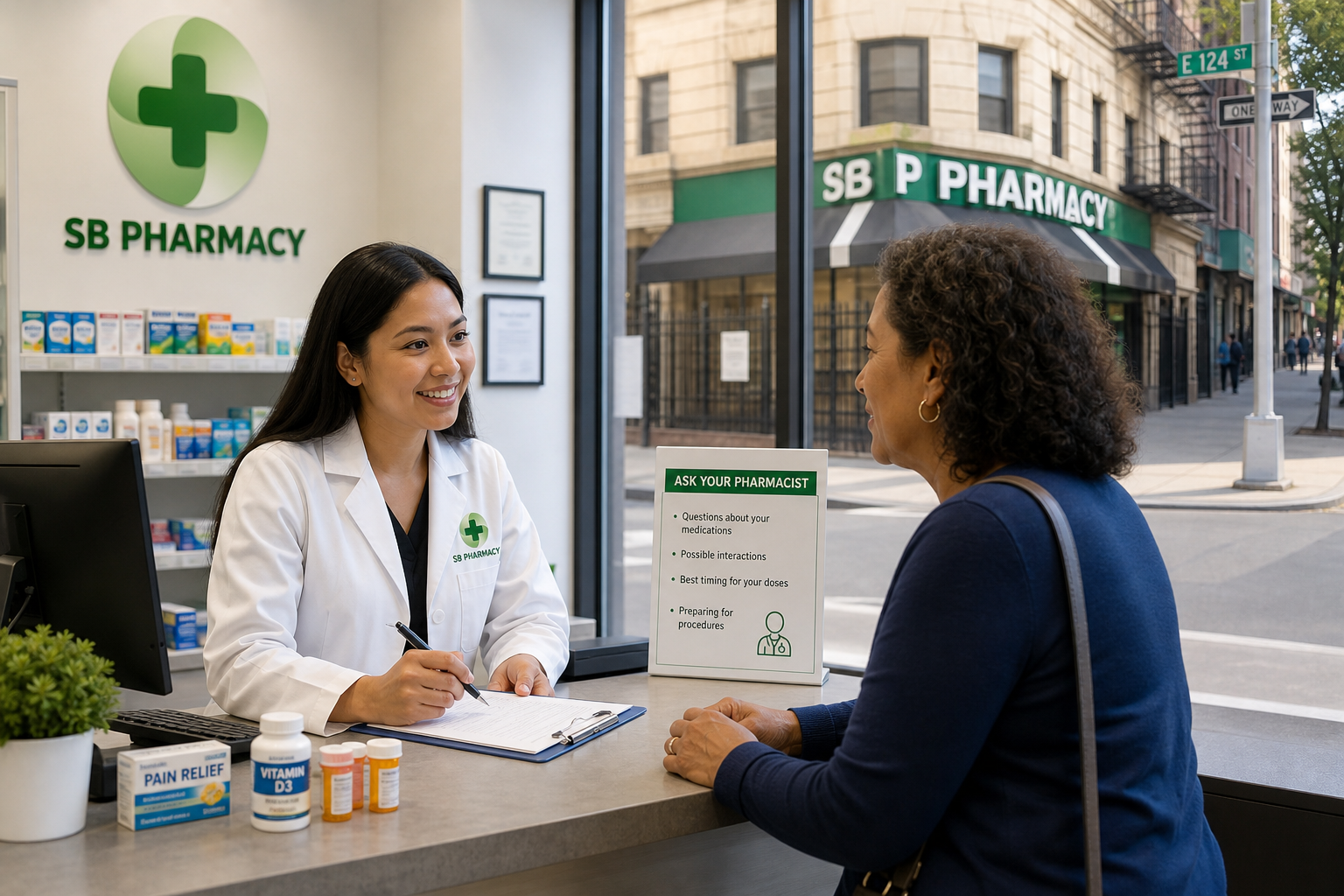
Your local pharmacist is an important resource for medication-related questions before and after dental work. The pharmacy team at SB Pharmacy, located at 27-29 E 124th St in East Harlem, can offer:
- Guidance on medication lists to share with your dentist
- Information on possible interactions between your prescriptions and dental anesthesia or antibiotics
- Advice about over-the-counter pain relievers appropriate for your situation
- Support in obtaining your post-procedure medications
- Reminders about medication timing and safe use
- Clarification on how to recognize and respond to common side effects
You can contact SB Pharmacy in person, by phone at (212) 534-2849, or by visiting sbpharmacynyc.com to learn more or ask general medication questions confidentially.
Questions to Ask a Pharmacist Before Dental Procedures
To make the most of your pharmacy visit, consider asking:
- Is it safe to take my regular medications on the day of a dental appointment?
- Are there any side effects or interactions I should watch for if I need a new prescription after dental work?
- Are over-the-counter pain medications recommended or should they be avoided?
- What information should I bring to my dental appointment regarding my prescriptions?
- Can you help me organize my prescription schedule around a dental procedure?
Planning for Medications You May Need After Dental Work
Dentists sometimes prescribe new medicines to support healing or comfort after a procedure. Common examples include:
- Pain relief medications
- Antibiotics, depending on your dental history or the type of work done
- Antiseptic mouth rinses
When filling a new prescription at a community pharmacy such as SB Pharmacy, be sure to ask:
- When to start taking the medication
- How long to continue it
- Whether it should be taken with food or on an empty stomach
- What side effects may be expected, and which should prompt a call for medical advice
The SB Pharmacy team can also answer questions about timing your refills and responsibly managing any leftover medications.
Tips for Preparing Your Medication List
A detailed medication list can be invaluable for both your dentist and pharmacist. Here is how to prepare one:
- Include the name, dose, and frequency for all prescription medications
- List all over-the-counter pills, vitamins, and supplements
- Add dates for when you started any new prescription
- Note any allergies or previous reactions to medicines
- Keep a copy handy for healthcare visits
A pharmacy team member at SB Pharmacy can help you create or update this list, ensuring it is always accurate and current.
Communicating With Your Healthcare Team
Clear communication is critical for safe and effective dental care. Share your medication concerns honestly. It can help to:
- Bring your medication bottles or a printed list to the dental office
- Write down your questions before the appointment
- Inform both your pharmacy and dentist of any new medicines started or stopped between visits
When to Contact Your Pharmacist or Dentist
Reach out promptly if you:
- Experience pain or bleeding beyond what was described in your dental aftercare instructions
- Notice signs of an allergic reaction (such as rash, swelling, or difficulty breathing)
- Have questions about when or how to take new prescriptions
- Are unsure which over-the-counter products are appropriate after dental work
- Need to adjust other medications due to changes in eating or activity after your procedure
The Role of SB Pharmacy in Supporting Your Dental Care Journey
SB Pharmacy is proud to support the East Harlem community with knowledgeable, personal service on all aspects of medication management, including preparation for dental procedures. We understand that dental visits can bring anxiety and questions, especially when it comes to medications. Our team is happy to:
- Work with your dentist and healthcare providers to coordinate care
- Answer questions about prescription and over-the-counter options
- Help you prepare and organize your medication list
- Provide clear explanations about possible medication changes
- Offer private consultations to discuss your pharmacy needs
Responsible Medication Guidance Before Dental Procedures
This article is intended for general educational purposes and is not a substitute for individualized medical advice. Speak with a pharmacist, physician, or other qualified healthcare professional about your specific medications and health needs.
Conclusion: Plan Ahead for a Safe and Smooth Dental Visit
Every dental procedure is unique, and medication needs can vary from person to person. Taking time to review your prescriptions and asking the right questions can support a safer, more comfortable dental experience. SB Pharmacy is committed to helping East Harlem residents prepare confidently for dental procedures by answering medication questions and assisting with pharmacy needs.
If you are planning an upcoming dental visit, need to review your medication list, or want to speak with a local pharmacist, reach out to SB Pharmacy at 27-29 E 124th St, New York, NY 10035, call us at (212) 534-2849, or visit sbpharmacynyc.com to learn more. We are here to support your wellness—one prescription and dental visit at a time.